Ode To Mom

Life wasn’t gentle with my mother.  She was born during the Depression, lost her father at the age of 2, and was raised on welfare until she could work at 14 years old and contribute to the household income.  She didn’t exaggerate when she said that she walked to school uphill both ways in any kind of weather.  On one memorable occasion, Mom showed up soaking wet and was sent home by her teacher, walking of course, back through the pouring rain.

The cards that Life dealt her might have caused a more fragile woman to fold. But Mom was unashamed of who she was and never lost her grasp on the humility that resulted from growing up in poverty.  She accepted things as they were and didn’t let a label or a medical condition, like Multiple Sclerosis, define her.

The girl who never received gifts as a child, except one little chalkboard, grew up to be the mother and grandmother who showered her family with generosity.  There was a card for every occasion and cash that fell out of it. There was a limitless budget for arcades and carnivals. And there were treats, of course. Everyone got them when she showed up, including the dogs.

Mom was fair to a fault. At the annual Easter hunt, every grandchild was allotted a specific number of eggs to claim. You wouldn’t dare try to cheat or lie to her – she valued honesty, rightness, and precision above all else. I’ll never forget when she made me sit at the table as a teenager, balancing a checkbook until a 4-cent discrepancy was found. Or how proud she was of her impeccable driving record, even when her legs failed and she switched to driving with hand controls.

Mom was an avid card player and loved to gamble, especially on a road trip with her sisters.  You might guess that more than one of her online passwords was ‘Las Vegas’ and that we were the only family we knew to have a slot machine in our house.  

Mom had no basis for self-righteousness and wasn’t interested in conflict or drama. She was dependable, pragmatic, and Organized with a capital ‘O.’  We would joke that if you sat still too long, Mom would file you in a drawer or throw you in the trash.  

We’ll miss the woman who kept all of our childhood drawings and would tell us how proud she was.

We’ll miss her stellar memory and being able to call her to settle a dispute about the rules of a card game.

And we’ll miss recapping the latest Bruins game with her, while secretly egging her on by mentioning Sydney Crosby of the Pittsburg Penguins. “He’s a cheap player,” she’d snarl, “Our Chara should teach him a lesson.”

Thank you, Mom, for leaving us with a legacy of traditions, an appreciation for classic films, and countless gifts – both tangible and intangible.

I hope that when you got to Heaven, they played the song “In The Mood” by Glen Miller so you could Jitterbug your way through the Pearly Gates.

I’m sure there’s a card table there at which your sisters, your mother, and your friends have saved a seat just for you. Maybe, if you let Dad play cards with you, he’ll make you a lemon meringue pie.

May Lady Luck be with you forever, Mom.

We love and miss you.

End-Of-Life: The Journey

“Don’t complicate the present by reviewing the past or dreading the future.” These are the poignant words I stumbled upon on my mother’s 86th birthday. 

Mom is struggling physically and mentally.  As a result, I’m struggling emotionally.  She’s slipping away and I’m grasping at her life while trying to manage her pain and mine.

At a time like this, it’s hard to fend off regret about misguided choices, love withheld, and missed opportunities. Melancholy tempts me, reeling me in with sweet or sour memories, showing me a future without a mother and a present in which there’s no way to capture time.

Mom’s memory is fading. People and stories are new to her every 30 seconds. She may not recall my name, but she smiles when I enter the room – a recognition that I am someone she enjoys. Following her lead, I paste a smile on my face, pretending that all is well until I can see that it actually is.

Without an anxious mind to highlight what’s wrong, Mom is more content – almost gleeful and childlike. Conversation, though repetitive, is lighthearted and devoid of expectation or innuendo. This version of Mom is delightful if I choose to look with fresh eyes.

My work is to accept that I’ve lost the mother I knew.  Even though it’s been decades since I felt I needed a mother, the idea of being parentless strikes my sense of stability. Grief begins its journey and invites me to acknowledge where healing is needed. Pain shows me where I’m holding back.

Heaven is rolling out its red carpet slowly, allowing Mom’s fans the opportunity to admire her as she walks toward the grand ceremony of transition.  One day or night, her name will be called and she will receive the award of freedom from a tortured body.  She has suffered to be sure, ever-stoic in the face of pain and loss.

Will I be able to cheer for her when I know I’m losing all but the re-runs of her in my mind? Is it possible for me to honor my grief without dishonoring her glory? Can I truly let her go in peace?

This end-of-life process is a beautiful gift in ugly wrapping. It takes courage to open it and reveal its contents. When we do, we may be surprised to discover the loving message within.

Gratitude reveals that it is a privilege to have an in-kind opportunity to support the person who has supported me since before my first breath. Perhaps this is the simple point of living – to care for each other throughout our shared journey back to Love.

Building Bridges

My daughter’s entire medical record arrived, as if by nostalgic joke, on the day she departed on a  journey 9000 miles from home.  The 2-inch stack of papers summarized her growth, injuries, and illnesses over 20 years, providing a dispassionate account of milestones and incidents that were filled with emotion in real-time.

This condensed flashback brings gratitude not only for positive outcomes and spared suffering but for the privilege of providing care and comfort to a little person who relied on me. One who now has people relying on her.

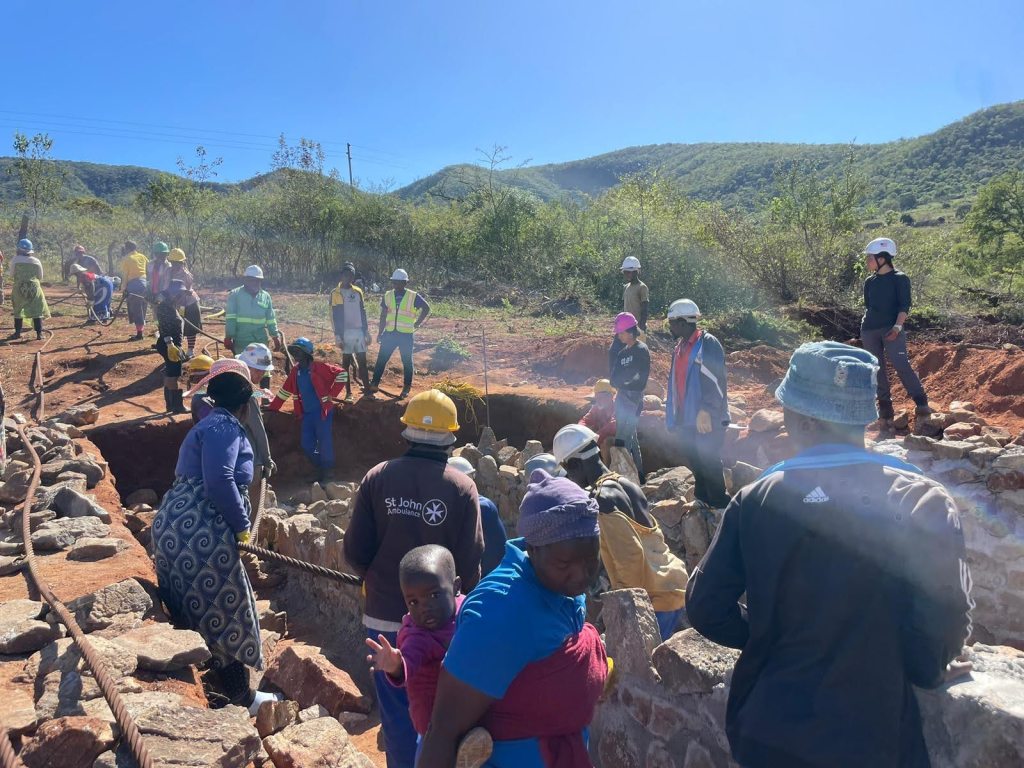
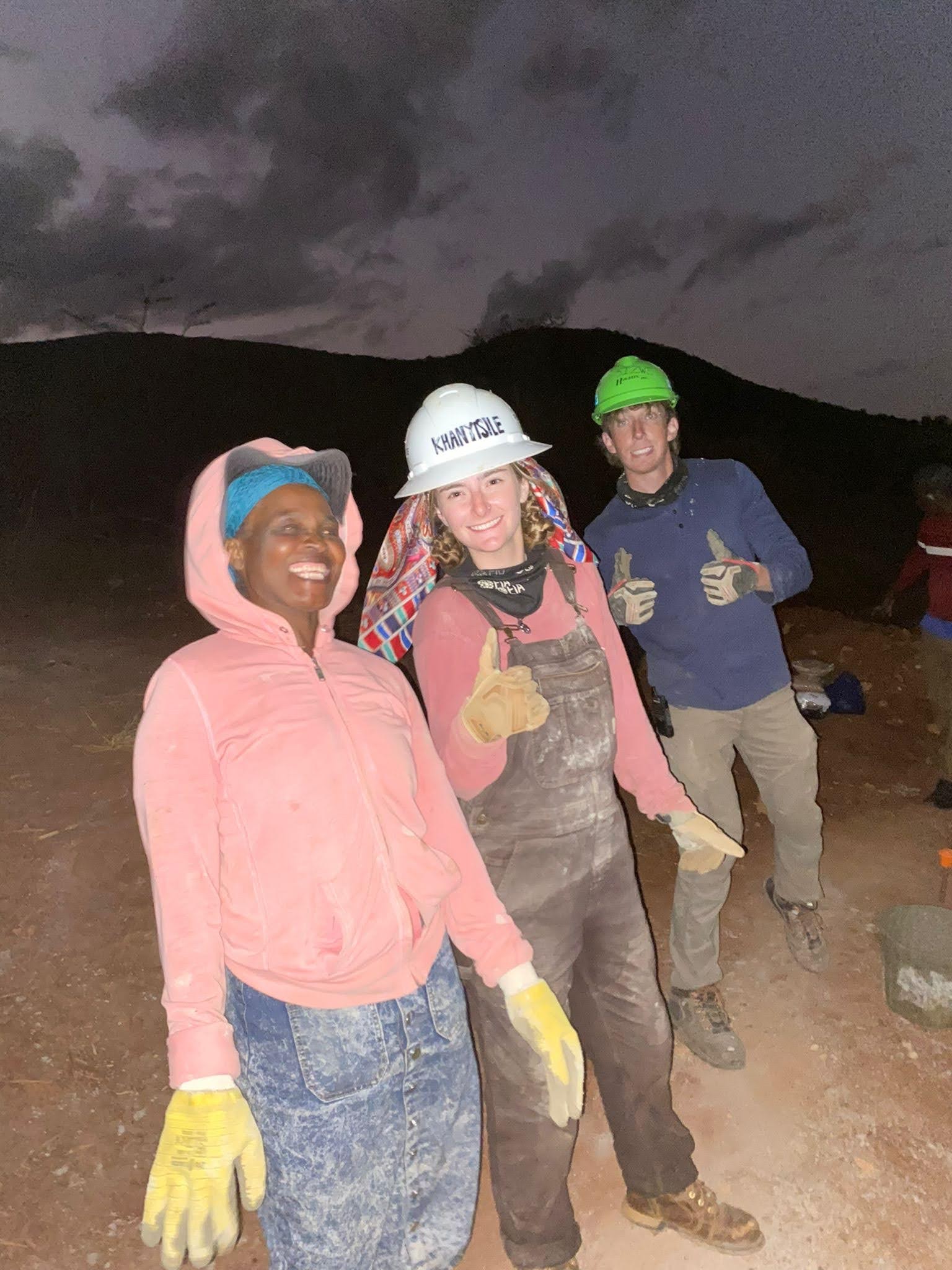
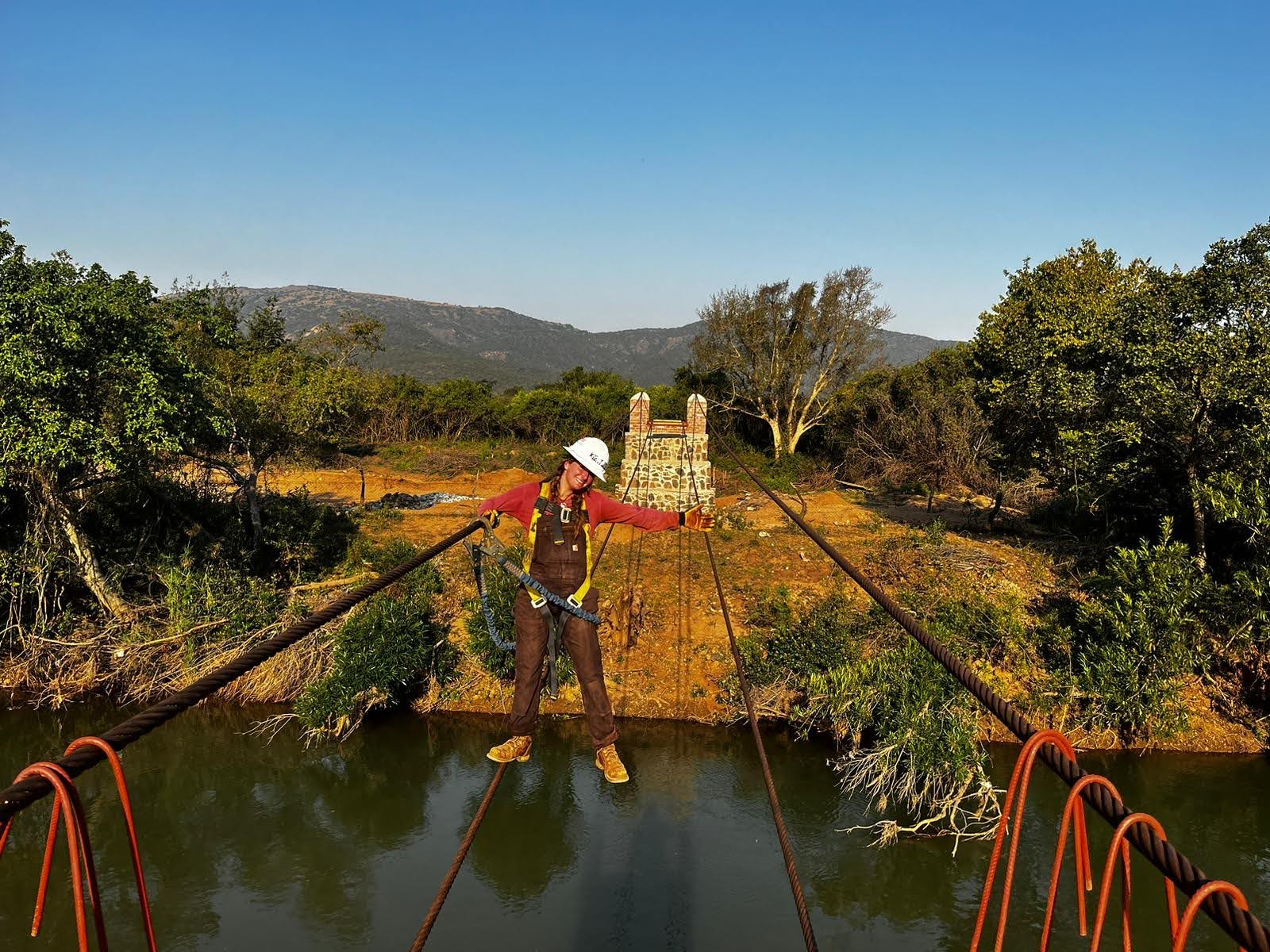
Peach is building a bridge, both literally and figuratively, with a team of aspiring engineers in Africa. At the initial shock of hearing that my homebody daughter signed on for this project, I asked why she wanted to participate. She said, “Because even though I know it will be really hard for me, I know it will be really good for me.”

Peach borrowed confidence from her future self like a warrior, setting the tone for this worry-prone mother.  When anxiety about my daughter’s endeavor threatens my peace of mind, I follow her courageous lead and choose not to check the box. 

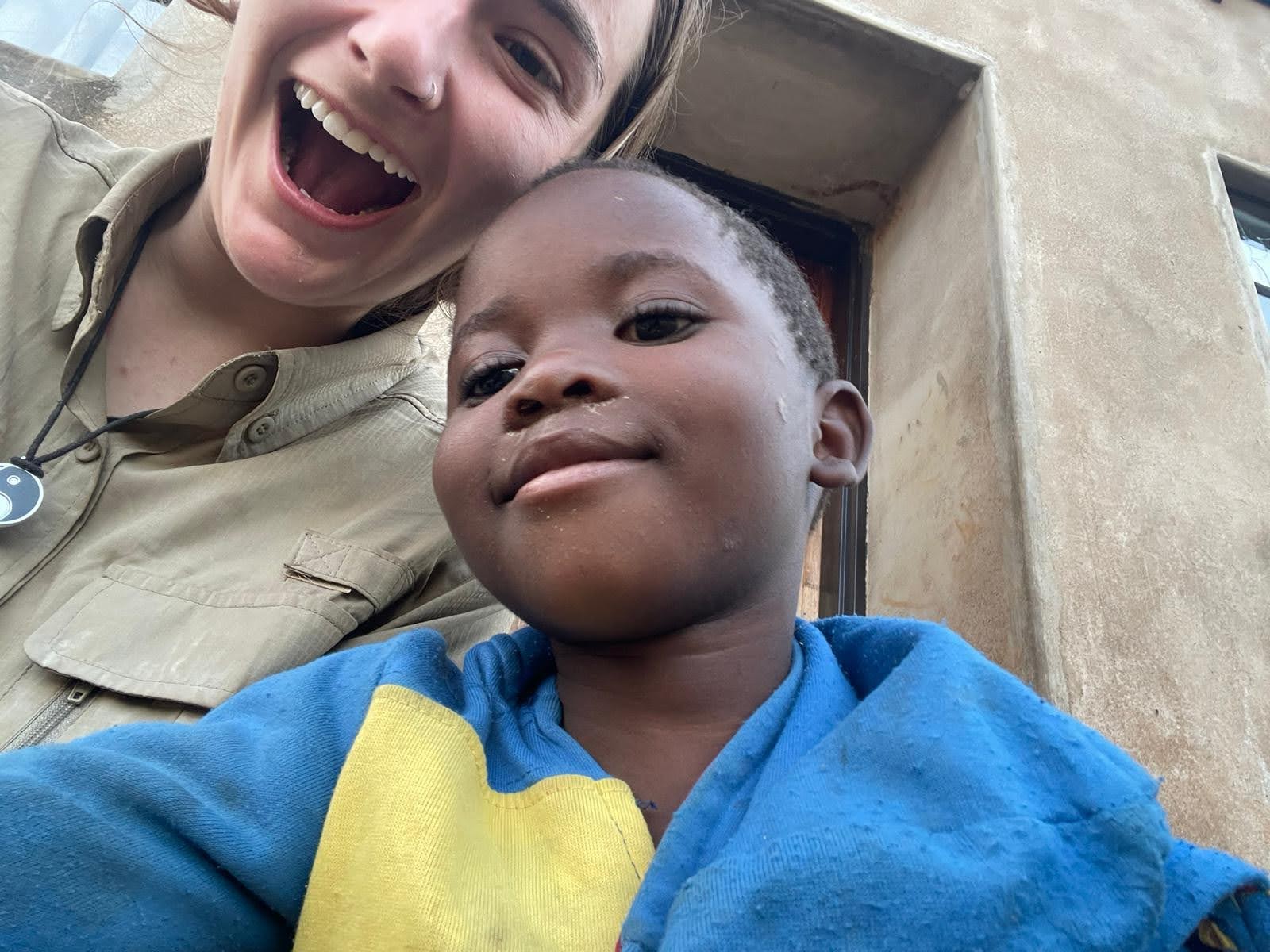
Peach has been ‘adopted’ by her Siswati family. She has a Máke (‘ma-gay) – a mother who teaches her how to cook over a fire.  She, the baby of our family, now has little ‘sissies’ who follow her around, idolizing her, and giving her an opportunity to be a role model. The world is embracing her, and naming her by her strengths. They call her Khanyisile – One Who Brings Light.

We receive a much-anticipated call from Khanyisile and are greeted in the local language which flows off her tongue. Her excitement is contagious as she tells stories of both frustration and gratification in balance. Our girl is much, much more than she was a few weeks ago.

Through the intersection of cultures, there is much to be gained, shared, and tolerated – like sleeping on the ground, washing clothes by hand, and using a primitive latrine. Me thinks there are worse things a mother could imagine for a daughter who was raised in a relatively spoiled society.

Beyond the obvious, this project has depths of significance that no one can anticipate. It will change and inform many lives in ways yet undetermined – but not just because it’s an extreme experience. When we say ‘yes’ to any calling big or small, near or far from home, which awakens a new part of ourselves, the ripples of growth fan out and infiltrate life. Thus, when one of us expands, we all expand. 

Peach is bemused when I convey how impactful this project is to friends and family sitting on the sidelines. A grandmother in her final chapter of life marvels at the opportunities available to modern young women. Her otherwise monotonous days bloom with colorful stories from a faraway land.  “Imagine,” she says, “an offspring of mine doing something like this!” 

Grandmother feels a thread of connection and a comforting realization – She had a part in creating this. Her legacy of love will continue to move through life, long after she’s left it.

This awareness is not lost amidst the loneliness I sometimes feel as a result of my children being scattered all over the world. The fact that they each take a part of my heart with them is both the bad news and the good news. How can I begrudge life for enticing my children to explore it, even as it holds me in place? 

When asked at the outset if I would visit my daughter in Africa, the answer was a definitive ‘No!’ This experience belongs entirely to her and I wouldn’t dream of interfering in it.

Life has its own plans for me that require a bit of emptiness. It is counting on me to be still and wait patiently until I become privy to its next invitation. In my restlessness, I’m learning to live with contradiction – acknowledging that one can hold both joy and pain, emptiness and fullness, love and fear, anxiety and excitement. We humans are not confined to singularity of emotion. Life offers a ‘both/and’ existence, not just an ‘either/or’ one.

My Peach teared up when she talked about leaving her new family, despite the fact that she misses her birth family. I don’t try to talk her out of her anguish but rather hold space for it in the company of my own competing desires.

The more I become willing to surrender to life on life’s terms and to accept that I am but a witness to its greatness, the easier it is to see Life’s impressively self-sustaining nature. Through each of us, Life sheds light on hidden places, revealing and rediscovering itself throughout eternity.

Secrets Of A Lasting Marriage

I hated my husband when I first met him.  As a college girl in constant search for love, my reaction to our introduction was, ‘I could never marry someone like him.’  Twenty-five years later we’re still together. Life has a sense of humor that way.

As we celebrate our silver anniversary, and people teasingly ask us our secret to a lasting marriage, we answer sarcastically, “We still have no idea.  We’re making it up as we go.”

Marriage doesn’t come with a GPS.  And the tour guides that one could consult are limited by the simple fact that they aren’t living your relationship.  The reality of partnership is that it requires Work and no one can do it for you.  As Friend likes to say: “Marriage, not as advertised.”

If I were to renew my marriage vows from the perspective of a seasoned wife, they would sound very different from the original version.  In truth, I had no idea what I was promising when I said ‘I do’ in my relative infancy. 

How could I know what it meant to love through bad times when life hadn’t taken me down yet? 

How could I understand the level of courage, stamina, and flexibility that marriage requires when love was fresh and new?

Instead of promising to ‘honor and cherish all the days of my life’ (which is a cruel set-up for failure if you ask me) I’d say something more realistic like this:

I promise to learn about love with you and do my best to rise to its challenges.

Love is an everyday choice, a deliberate effort – like making a meal. Some days I eat junk food and my body suffers. Some days I offer more attention to my social media page than I do my beloved and our love suffers. Choices.

I’d wager that at some point in every marriage, a couple wakes up to the reality that, for better or for worse, love changes. What was once simple becomes more complicated. This isn’t bad news. Weathered love has character. Its scars tell stories of both tough times and triumphs that render it more durable and perhaps less pretty from the process.  But then, marriage isn’t a beauty pageant.

Dave Willis said, ‘Couples who last aren’t the ones who never had a reason to divorce.” 

I’m no expert on sustainable relationships but this sounds accurate to me.  It isn’t the absence of struggle that leads to happy ever after.  It’s the idea that there’s something beyond the struggle that’s worth finding.

In my experience, love has to be just a bit stronger than fear.  Compassion, a little bigger than judgment.  Patience, a little deeper than frustration. And forgiveness, a little freer than resentment.  Marriage doesn’t require perfection to thrive.  It just needs a slight edge above the alternatives.

Husband and I aren’t a model couple.  Our relationship can be fierce by comparison.  We are loud with each other, raw, and often careless with words.  But after all this time, we know that this too is love.

Letter to My Elderly Father

Dear Dad,

Remember when I crashed the car and you didn’t get angry?  After you made sure that I wasn’t hurt, you laughed because the car was bent into a funny shape.  “Cars are replaceable. People aren’t,” you told me, and I instantly learned a lesson about values.

That single incident shaped me more than you know.  It shaped your grandchildren too because I adopted your parenting mantra:  ‘Don’t cry over spilled milk.’

We quote you a lot, you know.  Just the other day, when I was filling your medicine dispenser with the visiting nurse, I shared the sage advice that punctuated every task of my life, “Measure twice, cut once.”  You had an expectation of perfection and attention to detail that served you well.

Your standards perpetuate through those who have had the benefit of learning from you.  I don’t have the skills you had for building and fixing absolutely everything, but I try because you raised me to be capable and I still want to make you proud.

I suppose you were preparing me for the time when your own body declined to the point that you could no longer help me.   You wanted to make sure that I could care for myself. Now I’m caring for you. I don’t blame you for resisting my help. To do otherwise would be an admission of defeat or loss, and that isn’t your style.

It hurts you, I know, to sit out of life and let others do the work you used to do.  You want to feel useful and be productive. You want to contribute in the ways you did best.  But the body has its own plan and yours is begging for mercy.

Somewhere deep down you know that you’re losing your battle with age and illness, but you’ll fight until the curtain closes and never concede to the wishes of those who love and serve you.  I admire that tenacity (aka stubbornness) and recognize a bit of it in all your kin. It’s a signature of your culture and, perhaps, a result of your personal history.

Soon enough we’ll have to say goodbye.  No matter how much I prepare for it, it will destroy me, at least for a while.  How can it not? You were this girl’s hero.

I’ll try to be brave, Dad, like you taught me. “Show ’em what you’ve got,” you’d say, which always made me straighten up a little taller and believe in myself, because you believed in me.

I would claim to loathe the practice of sugar-coating life – of pretending, once someone is gone, that it was all sunshine and butterflies.  But now that we’re nearing the end of our time together, I’m hard-pressed to care about the ugly parts. Somehow, the struggles seem to enhance the story, and I wouldn’t want to cut out one bit.

It’s okay to be afraid, Dad.  I want to give you comfort and reassurance that all will be well.  To let you know the ways in which you are unforgettable; how much your life has meant and will continue to mean.

Every time I see a fish tank, I recall a sweet memory of you pacing back and forth in front of it to calm sleepless babies.  When I hear someone whistling, l remember how you always whistled while you worked and it makes me smile because no one whistles when they’re angry.  And when I see someone in need, I ask myself how I can help, because that’s what you would do.

As a parent, I question if I’ve done enough for my kids.  In case you wonder that too, Dad, put your mind at ease. You gave me everything you had to give, and it was more than enough.

Your life was modest but your legacy is immeasurable.  The inheritance you left us consists of intangible wealth – a toolbox of resources to build a solid house atop the foundation you set.

Thank you, Dad, for being part of my life.   I love you, and I always will.

Deb

A Letter To My College Graduate

Dear daughter,

Sometimes I gaze at you – a beautiful, kind, mature young woman on the doorstep of adulthood – and I wonder what I did to deserve you.  I recall the work of child-rearing sharply enough – the disciplining, advising, nurturing and consoling.  But how it amounted to the miracle of you is a mystery. 

You exceed any dream I could possibly have had.  When you were born I tried to imagine who and what you would become, how I would support you, how I would fail you, and why life chose to put us together. But none of my predictions came close to describing all that unfolded.

I find myself wanting to reflect on our years together the way one wants to re-read a favorite story over and over.  Even the strenuous parts capture my attention in a way that they didn’t the first time around because I know where the story is headed and how crucial every morsel is to the overall theme.

I see how the world is better because of you.  I see how the future needs you.  And I see that despite my efforts to show you, you don’t fully realize how valuable you are. 

Graduation is an opportunity to indulge my desire to love you out loud.  In concert with mothers everywhere, I proclaim my pride along with my gratitude for having had the privilege of raising a child.

Life must be smiling at itself for the job it’s done in creating you, us, all of it.  Especially the love that perpetuates between us, filling the world with wonder.

As you make your way into the next chapter, far from my reach, know that there is nowhere you can go that my love can’t follow.  I will be right here, holding a space in my heart that was carved out just for you.

Try not to begrudge the loss of the familiarity that you hold so dear.  Keep moving forward in the way that you do, with a zest to experience everything, knowing that nothing is meant to last forever.

All that life wants from you is to say ‘yes’ to that which draws you out and brings you joy.  May you find what you desire, and be alert to the surprises that await you.

Love,

Mom

If You Love Something, Let It Go

They say that if you love something you must let it go.  If it loves you in return, it will come back to you.  I didn’t realize that I was counting on this when I sent my daughter off to college 4 years ago.

In theory, I had launched her into the world and was glad of it.  But I failed to see the strand of hope that tethered me to her like the string on a kite soaring out of reach. 

When my daughter announced that upon graduation she would travel 8000 miles away to teach in a third world country, the tension on the line that connects us tightened, begging me to release my remaining grip.

I indulged in sadness just once, crying briefly, then it was done.  I had never been so forlorn about something that I endorse 100%.  But history has taught me that my fears are poor predictors of reality, and that time spent on worry is always wasted.

It seems like yesterday that I left a teen daughter trembling at the entrance to Girls’ Leadership camp – a place she hesitantly agreed to attend for the summer preceding High School.  My homespun girl needed to build courage and independence in adolescence.  It was my job to help her find it, not to wait for a time when she felt ready.

As maturity set in for her, I ceased having to push her off the platform of certainty. Our roles reversed and it was I who felt reluctant about my daughter’s ever-expanding adventures.  Like tearing apart velcro, I could feel the ripping each time she ventured farther into the big wide world. The beauty of velcro is that it can be joined and separated over and over and remain just as strong.

In time, I realized that I wasn’t losing a child to the world.  Rather, I’d gained a scout through whom I would experience places and people I wouldn’t otherwise encounter. I would see life through my daughter’s eyes and share in her world no matter the miles between us.

I used to believe the adage that parents give their children wings to fly.  In truth, children are born with wings and the instinct to use them.  Flying isn’t taught but allowed.  We can give nothing more than freedom.

When the fear of flight rises, it may take all the determination one can muster to release the restraints that bind us, and our loved ones, to the ground.  It’s not until we truly let go that we can enjoy the reward in soaring.

Parenting is a noble prospect, rife with opportunity for personal growth.  As we raise a child, we raise ourselves.  Our mission, if we accept it, prompts us to evolve into far greater beings than we ever imagined, or wanted to be.

Unconditional love insists that we surrender our parental fears in order to fulfill a commitment to those who follow our lead.  When we cooperate, we find that life has a way of unfolding in the most natural and perfect way. 

Despite inherent uncertainty, there is peace waiting for us.  We have only to release our grip on what we think we know in order to see life smiling at us and saying, “Trust me.  I’ve got this.”

Reflections On Grief and Loss

Sometimes life isn’t what it appears to be.  Sometimes loss is actually gain.

When I was a newlywed, my father-in-law died unexpectedly.  With less than 2 months of marriage under my belt, I felt ill-prepared to play the mature role of wife to the aggrieved.

Husband and I were supposed to be figuring out little things like how to co-exist, compromise, and negotiate whether one should squeeze a toothpaste tube from the middle or roll it up from the bottom.  Instead, we were thrust into decisions and actions that catapulted us past the fun frivolity of young adulthood.

In hindsight, the events of that summer were serendipitous.  Being immersed in grief, Husband and I had no inclination to trifle with each other.  When peers voiced their stage-appropriate struggles and discoveries, I would listen with the ears of an outsider, unable to relate.  From my new perspective, there were much bigger things in life than, life.

The blessings amidst loss are difficult to see.  Even with an open heart and willing mind, clarity may never arrive.  The darkness surrounding grief is thick and impossible to penetrate with the naked eye.  If one has any hope of experiencing the full range of possibilites, one must abandon conventional thinking and principled resistance.

In situations such as school shootings, it’s tempting to stir the pot of grief with anger, regret, and demands for retribution.  We want someone to ‘pay’ for our loss.  When it hurts so badly that it’s too much to bear, we share the pain, hoping it will make us feel better.  And sometimes it does.  There’s no greater love than that from another human who can hold our grief, if even for a fleeting moment.

But healing and transformation will never arrive in the midst of hate.  We can’t hear the wisdom within whilst venom is spewing forth.  Anger is a catalyst to be sure.  It can be helpful to light a fire that will enlighten the world.  But true change needs a safe entry-point.  When our intent is to burn those from whom we need help in order to move mountains, we all lose.

It must follow, if one is to go on living after loss, that we pick up the pieces of a shattered delusion of order and justice and put it back together in a way that suits a new paradigm.  This is true no matter the circumstances of loss.  This is one of the gifts to be garnered.

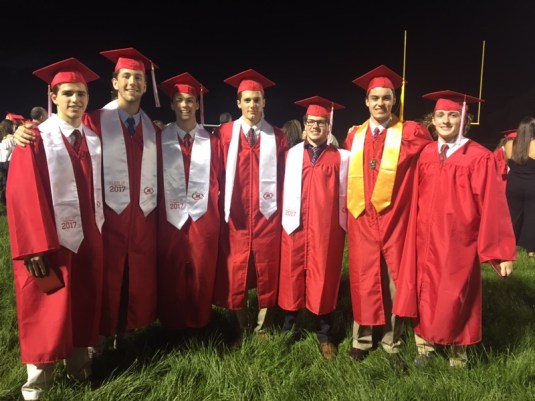
During my recent experience with grief following the loss of Beagle’s 19 year old friend, I found myself privy to a fresh perspective of sorrow.  It was intense and heart-breaking, as one would expect, but it was also magnificent.

Beagle and company filled up an entire church pew, standing shoulder to shoulder in their dress clothes without space enough to slip a piece of paper between them.  Parents stood behind, watching their sons’ bodies tense and tremble, listening to tears flow, and observing, in warp speed, the transformation from boy to man.

These boys, the embodiment of healthful youth, processed through protocol and were received with enthusiasm by their friend’s family.  They toasted the boy who no one had ever seen in a bad mood. They poked fun at their late friend’s expense, just as they would have if he was there with them, solidifying his lasting place in the brotherhood.

The gifts of grieving unfolded with every ritualized, as well as every unscripted, step.  Never was the congruence of love so evident  as it was in this group coming together, supporting each other in grief the same way they bond with each other in celebration.

Life is never the same after we lose a fellow human.  Each puts a personal stamp on the world that cannot be replaced. And there’s no prescription for how to go on living.  But one thing is certain: allowing yourself to experience loss for all its potential will inevitably lead to grace.

Support For A Child In Grief

I didn’t need to answer the phone to know that something was wrong.  Teen sons, in my experience, don’t just call Mom out of the blue.  A trembling voice confirmed my fear – something terrible had happened.  Beagle’s good friend, one of his posse, has died.

I find myself telling the news to everyone I cross paths with – not for any hope of consolation, but rather to solidify the truth.  Repeating the words moves me toward acceptance.  Beagle doesn’t know why, but he’s doing the same thing.  He didn’t want to talk at length about the tragedy, he just wanted to tell me, then hang up the phone and tell the next person and the next, until he could believe what he was saying.

In the hierarchy of horribleness, the passing of a child trumps the list of losses that one could encounter in a lifetime.  Few things are more cruel and bewildering.  When a life is cut far too short, the facade of relative safety and structure that outlines our typical days explodes, leaving us exposed to the elements of reality.  Nothing is guaranteed.  Life does not belong to us.  If it did, we would get to decide when it ended.

I have been around this block before, of course, and I know my way through grief.  But Beagle does not.  He is barely a man-cub and not yet fully versed in love and loss.  The time has come for Husband and I to teach lessons we had hoped would not arise for many years.

We cannot spare our boy any pain.  We can only hold a space for it, allowing it to express itself in any of its wildly varying forms.  We begin to paint a picture of grief, leading by example with unrestrained tears, voiced regrets, and demonstrations of strength and support.

We show and tell Beagle that no matter how mature you become, you will struggle with death.  The very fact that you have dared to love and connect to others means that you will suffer loss.  Try not to hate love for loss.  Try not to hate life for death.  Keep your heart open.  Don’t construct walls where doors should be.  And promise me you won’t subscribe to outdated stereotypes of masculinity.  Real men DO cry.

Beagle, you were meant to cross paths with your friend who left so soon.  The chapter of time with him is done, but the story doesn’t end.  The two of you will eternally be connected.  You will remember him and integrate him into your future with stories and rituals.  You will find ways to honor him.  You will introduce him to people who will never meet him. 

Eventually, happiness will touch your sorrow.  You will smile when you think of your time together instead of feeling drawn into the pit of your belly.  Don’t rush the healing. And don’t prolong it for anyone else’s sake.  Let it evolve in it’s own time.  Trust your heart to guide you. 

We were all lucky to have known this sweet boy.  Thank you, Beagle, for bringing him into our lives.  Know that we are here for you, supporting you as you leave the innocence and carefreeness of your youth behind.  You are now part of a club that no one wants to belong to.  You are far from alone.

How To Stick To A New Year’s Resolution

A woman sat at her desk at 10 a.m. counting the minutes until lunch.  She was staaarrrving, she said, despite the fact that she had eaten breakfast just 2 hours before. Self-deprivation was masquerading as hunger in response to the woman’s decision to give up sugar entirely, thereby prompting her refusal to partake in the customary mid-morning coffee and donut run.

I took a step back in case she decided to take a bite out of my arm.  I’ve seen this level of desperation before.  It follows the January 1st festival of resolution-setting that can create misery amongst otherwise happy, even-tempered humans.

Resolutionists have good intentions to better themselves, but many make the mistake of declaring war instead of transformation and end up embattled with an enemy they can’t defeat.  They decide that they’re somehow failing and they plot a course of action so extreme and unfriendly, they can’t possibly sustain the motivation to pursue lasting positive change.  It’s as if they’re running away from themselves, leaving behind the person they are for the better version they want. 

But we can’t outrun ourselves.  Wherever we go, there we are, judging and shaming and should-ing all over ourselves.  If we fail to prepare properly, we find the journey of self-improvement to be  lonely and impossible.  So we turn back, unable to see it through to the end.  Then, of course, we emerge with a new reason to be disappointed in ourselves.

If we want to create meaningful change, we have to change our personal stories.  Instead of running the script of defeat in which it’s sooooo hard to lose weight, or to break a habit, we begin to introduce compassion. 

In this softer story, we love ourselves enough to change eating habits thoughtfully and gradually; we  resist temptation by showering ourselves with simple comforts and words of encouragement; and we muster up the same patience with ourselves that we would grant to a small child who’s learning a new skill.

The secret to change is love, plain and simple.  (If you snorted bitterly when you read that, take a breath.  It’s truer than true.) When we meet ourselves without anger and resistance, we find compassion instead of contempt.  Via the loving way, we encounter no enemy within, no destructive thought to sabotage our goal.  There is only kindness, pulling us along, picking us up, and making us feel like the better person we want to be.

Change can be difficult, but it doesn’t have to be fatal.  Now that January has come to a close, I hope to find all of my friends in good health and spirits – unbeaten by their own austerity, and unintimidated by the smell of a donut.

Previous Older Entries